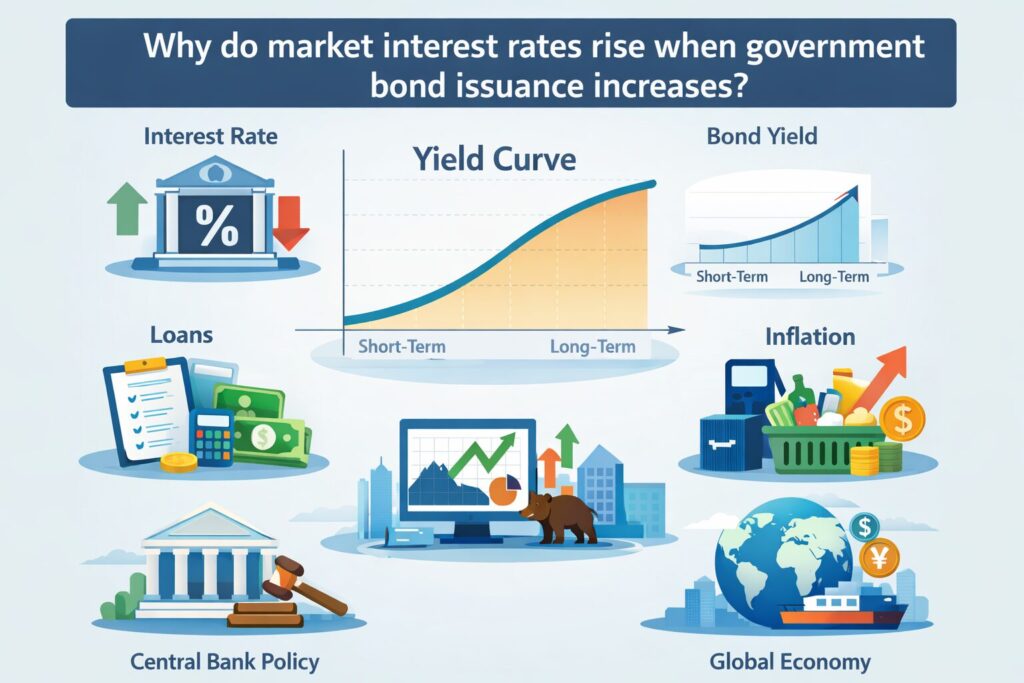
Understanding Government Bond Yields: The Hidden Key Behind Economic Trends
You keep hearing about “bond yields” in the news—why are they so important anyway?
Hi there! With all the buzz around interest rates lately, have you ever wondered what government bond yields actually mean for your daily life? I used to think they were just another financial number. But it turns out, these figures have massive influence—from your mortgage rate to your stock investments, even how much you pay at the grocery store. In this post, I’ll walk you through what government bond yields are, why they fluctuate, and how they impact the economy and your wallet. Let’s break it down together—financial news will start to make a lot more sense!
What Is a Government Bond Yield?
A government bond yield refers to the interest rate that a government promises to pay investors for lending money through bonds. While it may sound like a number that only affects national debt, this rate acts as a benchmark for interest rates throughout the entire financial market. From mortgages to savings accounts, many types of interest rates move in tandem with government bond yields. In that sense, bond yields serve a role similar to a central bank’s base rate—guiding overall economic activity.
How Rising Yields Affect Loans, Investments, and Stocks
When bond yields go up, borrowing becomes more expensive. Banks raise loan interest rates in response, making mortgages, personal loans, and business financing less attractive. This reduces consumer spending and corporate investment. Companies also face higher costs when issuing corporate bonds. As a result, the stock market often comes under pressure since investors expect lower profits ahead.
| Impact of Rising Yields | Details |
|---|
| Higher loan interest rates | Reduced spending and investment |
| Costlier corporate debt | Downward pressure on stock prices |
| Bond prices drop | Yield rises inversely |
4 Key Macroeconomic Factors Driving Yields
Bond yields don’t move randomly—they’re influenced by major economic forces. Here are four primary drivers that shape yield movements across the world.
- Economic Growth & Inflation: Stronger growth and rising prices often push yields higher.
- Central Bank Rate Policies: Changes in base interest rates impact bond yields directly.
- Bond Supply and Demand: More issuance raises yields; more buyers lower them.
- Global Events & Sentiment: Crises, wars, and market fears influence risk appetite and yields.
Monetary Policy and Its Direct Link to Bond Yields
One of the most powerful forces behind bond yields is central bank policy. When a central bank like the Federal Reserve raises the base interest rate to curb inflation, yields on government bonds tend to rise. Conversely, when inflation subsides—as it did in September 2025—the Fed may lower rates, causing yields, especially on shorter-term bonds, to fall. Large-scale asset purchases (quantitative easing) or the opposite (quantitative tightening) also impact the demand and pricing of government bonds.
Supply and Demand: The Market Forces Behind Yield Changes
Think of government bonds as products in a market. If the government issues a large amount of bonds (increased supply), it often needs to offer higher yields to attract buyers. On the flip side, if demand surges—say, from insurance companies looking for safe returns—yields drop. During times of large fiscal deficits, bond issuance increases, which can push up long-term yields unless central banks intervene.
| Market Condition | Impact on Yield |
|---|
| Massive bond issuance | Yields rise |
| Increased investor demand | Yields fall |
| Quantitative easing (QE) | Yields fall |
Global Sentiment and External Factors: How the World Affects Your Bonds
Markets are emotional. Events like wars, crises, or foreign policy changes can shift global risk sentiment and impact yields. During uncertainty, investors often rush to buy safe-haven assets like bonds, pushing yields down. Meanwhile, if the U.S. raises its interest rates, investors might pull out of other countries (like South Korea), leading to weaker currencies, higher import prices, and inflation—all of which could push yields back up locally.
- U.S. rate hikes → 10 bps rise = 7 bps increase in Korean 10-year bonds
- Financial uncertainty → Bond demand rises → Yields drop
- Currency depreciation → Import inflation → Higher local rates
QWhy do bond yields appear so often in the news?
Because they influence interest rates, inflation, investment trends, and stock prices—making them a key economic signal.
QWhy do rising yields hurt the stock market?
Because higher yields mean higher borrowing costs and lower corporate profits, reducing investor enthusiasm for stocks.
QDo bond yields always fall when central banks cut rates?
Usually yes, but not always. Market sentiment and global events can override expected outcomes.
QWhat’s the difference between the base rate and bond yields?
The base rate is set by the central bank. Bond yields are determined by the market, though both influence each other.
QIf U.S. rates rise, does South Korea have to follow?
Not necessarily, but to avoid capital outflows and currency depreciation, it often makes similar moves.
QWhy should individual investors care about bond yields?
Because they affect your loan rates, investment returns, and even the broader economy you live and work in.
Bond yields may sound like a niche financial term, but they shape the interest rates you pay, the returns you earn, and even how much your groceries cost. Understanding them gives you a powerful lens into the economy. If today’s post helped clear up some confusion, I’d love to hear your thoughts. Are you seeing any signs of rising yields in your own life or investments? Drop a comment and let’s talk!
government bond yields, interest rates, inflation, monetary policy, central bank, treasury market, debt issuance, global finance, U.S. Federal Reserve, market psychology