Abstract
Solid-state batteries are drawing growing attention as a next-generation energy storage technology capable of reshaping the safety, energy density, charging performance, and cell-design limitations of conventional lithium-ion batteries that rely on liquid electrolytes. The industrial significance of solid-state batteries, however, does not lie merely in replacing a liquid electrolyte with a solid one. Solid-state batteries can become a credible alternative to the existing lithium-ion battery regime only when several conditions are met simultaneously: room-temperature ionic conductivity in solid electrolytes, stable electrode–electrolyte interfaces, large-area manufacturing, mitigation of degradation during repeated charge–discharge cycles, pilot-scale production, mass-production yield, cost competitiveness, supply-chain readiness, and policy and regulatory alignment. This article reviews the technical principles and commercialization bottlenecks of solid-state batteries and compares the 2027–2029 commercialization roadmaps of major companies, including Samsung SDI, LG Energy Solution, SK On, Toyota, QuantumScape, and Solid Power. Particular attention is given to Toyota’s collaboration with Idemitsu Kosan and Sumitomo Metal Mining, which illustrates that commercialization is not simply a cell-level challenge but an integrated project linking automakers, solid-electrolyte supply chains, and cathode-material mass production. The article further argues that the early market after 2027 is more likely to form around premium electric vehicles, high-performance vehicles, controlled fleets, and high-value applications such as aerospace, defense, medical devices, and compact specialty systems, rather than across the entire mass-market EV segment. In conclusion, solid-state batteries should be understood not as a fully established replacement regime, but as a transitional technology with paradigm-shifting potential, where technical promise and industrial uncertainty coexist.
1. Introduction
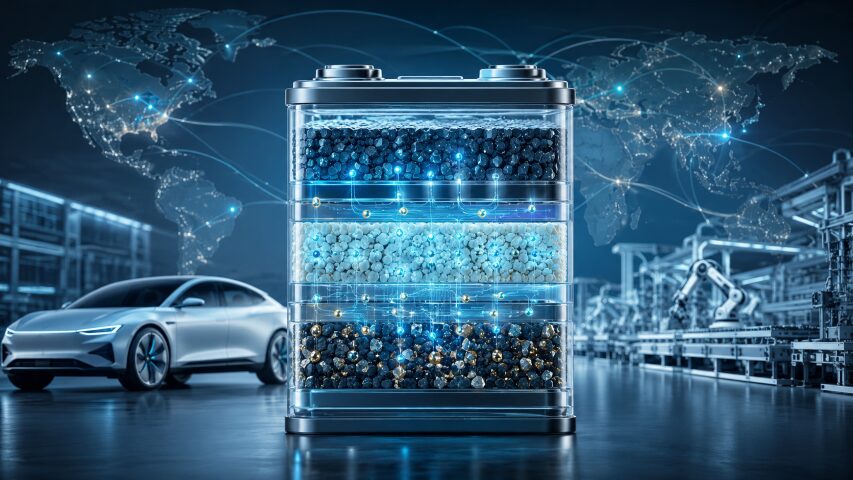
Solid-state batteries have emerged as one of the most prominent candidates in the next-generation battery landscape. Conventional lithium-ion batteries have enabled the rapid expansion of electric vehicles, mobile devices, and energy storage systems. Yet their reliance on liquid electrolytes imposes structural constraints related to safety, thermal stability, energy density, charging speed, and cell-design flexibility. Solid-state batteries seek to mitigate these constraints by replacing the liquid-based electrolyte, which mediates ion transport, with a solid electrolyte.
Industrial interest in solid-state batteries is closely tied to the expansion of the electric vehicle market. The International Energy Agency reported that EV battery deployment reached 1.2 TWh in 2025, with EVs accounting for more than 70 percent of total battery deployment.1 This indicates that electric vehicles represent the most important demand base for next-generation battery technologies. However, expanding EV battery demand does not automatically imply rapid adoption of solid-state batteries. BloombergNEF reported that the average lithium-ion battery pack price fell to $108/kWh in 2025.2 As the cost competitiveness of conventional lithium-ion batteries continues to improve, solid-state batteries must demonstrate not only superior performance but also competitiveness in cost, yield, and supply-chain maturity.
The central concern of this article begins with that tension. Industry discourse often describes solid-state batteries as a “dream battery” that will replace lithium-ion technology. From an academic perspective, however, the more useful question is not when solid-state batteries will replace lithium-ion batteries, but under what conditions they can restructure the existing lithium-ion-centered technological and industrial regime. To address this question, this article examines the technical bottlenecks, corporate commercialization roadmaps, post-2027 early market formation, and policy and regulatory conditions surrounding solid-state batteries.
2. Technical Principles and Industrial Significance of Solid-State Batteries
The defining feature of a solid-state battery is the solidification of the electrolyte. In conventional lithium-ion batteries, a liquid electrolyte mediates lithium-ion transport between the cathode and the anode. In solid-state batteries, a solid electrolyte provides the pathway for ion transport. This change is not merely a material substitution; it alters the electrochemical and mechanical relationships within the battery cell.
The most frequently cited advantage of solid-state batteries is safety. Liquid electrolytes can pose risks related to leakage, flammability, and thermal instability. Solid electrolytes, by contrast, offer the structural possibility of reducing some of the risks associated with liquid-electrolyte systems. LG Energy Solution identifies improved safety through the use of solid electrolytes, the potential to control thermal runaway, high energy density, and fast charging below 20 minutes as key characteristics of sulfide-based solid-state batteries.3
It would nevertheless be inaccurate to define solid-state batteries as inherently or absolutely safe. Actual safety depends not only on the chemical stability of the solid electrolyte, but also on electrode materials, interfacial conditions, charge–discharge protocols, cell pressure, manufacturing defects, and thermal management systems. When lithium-metal anodes or anode-less designs are introduced, the potential for high energy density is accompanied by challenges such as interfacial instability, lithium plating uniformity, dendrite suppression, and long-term cycle-life validation.
Accordingly, the industrial significance of solid-state batteries should not be framed as the simple elimination of fire risk. Rather, it lies in providing a new technological pathway that may reduce some structural risks of conventional lithium-ion batteries while enabling high-energy-density and high-power cell designs. For this potential to become industrially meaningful, repeated cell-level validation and stable mass-production processes are essential.
3. Commercialization Bottlenecks: Ionic Conductivity, Interfacial Stability, and Large-Area Manufacturing
The first major bottleneck in commercializing solid-state batteries is the ionic conductivity of the solid electrolyte. A battery can function effectively only when lithium ions move rapidly and reliably between the cathode and the anode during charge and discharge. Liquid electrolytes can penetrate the micropores of electrodes and create broad contact areas. Solid electrolytes, however, must maintain physical contact with electrode surfaces. For this reason, solid-state batteries require not only high ionic conductivity but also stable interfacial contact.
Sulfide-based solid electrolytes are widely viewed as promising candidates for automotive solid-state batteries because they can offer high room-temperature ionic conductivity and relatively favorable processability. LG Energy Solution has disclosed plans to commercialize sulfide-based solid-state batteries in 2029 and presents high energy density through an anode-less design as one of its main development directions.4 Nevertheless, sulfide electrolytes still require further validation in areas such as moisture sensitivity, interfacial reactions, manufacturing-environment control, and long-term stability.
Oxide-based solid electrolytes represent another important technological pathway. They may offer advantages in chemical and thermal stability, but their rigid and brittle properties can create challenges in electrode contact resistance, high-temperature sintering, thin-film formation, and large-area processing. It is therefore inappropriate to divide sulfide and oxide electrolytes into simple winners and losers. The eventual industrial pathway for solid-state batteries is likely to be determined not only by electrolyte chemistry but also by manufacturing processes, equipment, interface engineering, cell design, and cost structure.
The second bottleneck is electrode–electrolyte interfacial stability. In a solid-state battery, chemical and electrochemical reactions, interphase formation, resistance growth, mechanical separation, and degradation during repeated charge–discharge cycles can occur at solid–solid interfaces. Even if initial performance is strong, rapidly increasing interfacial resistance can limit product lifetime. This is one reason Toyota and Sumitomo Metal Mining are focusing on the durability and mass production of cathode materials for solid-state batteries. The two companies have been jointly researching cathode materials for solid-state batteries since around 2021 and have worked to address cathode degradation during repeated cycling.5
The third bottleneck is large-area manufacturing and mass-production yield. Laboratory performance in solid-state batteries can be demonstrated in small cells or sample formats, but automotive batteries must pass validation at the level of large-area cells, modules, packs, and vehicles. Uniform electrolyte-film thickness, low defect rates, electrode adhesion, cell-pressure management, process repeatability, and equipment productivity all determine manufacturability. Commercialization of solid-state batteries is therefore not only a matter of materials science; it is equally a matter of manufacturing engineering, quality control, and supply-chain development.
4. Corporate Commercialization Roadmaps: The Industrial Meaning of 2027–2029
The period between 2027 and 2029 has become a critical window in discussions of solid-state battery commercialization. Samsung SDI, Toyota, LG Energy Solution, and SK On have each announced commercialization targets centered around 2027 or 2029. These schedules, however, should be interpreted as company-announced roadmaps rather than independently verified mass-production performance.
Samsung SDI describes its solid-state battery as having an energy density of 900 Wh/L. The company presents this figure as higher than that of its current mass-produced prismatic batteries, suggesting a strategy that links high-energy-density cells to improved space efficiency and driving range in electric vehicles.6 Samsung SDI is also participating in a solid-state battery validation project with BMW and Solid Power, illustrating a collaborative structure that connects materials, cells, and vehicle-level validation.7
LG Energy Solution is developing sulfide-based solid-state batteries and plans commercialization in 2029. The company highlights improved safety, high energy density, and fast charging below 20 minutes as key features of its solid-state battery technology.8 This can be interpreted as a strategy aimed at high-performance electric vehicles and high-value applications.
SK On has been developing sulfide-based solid-state batteries and lithium-metal batteries through a pilot-plant strategy at its future technology facility in Daejeon. As summarized in the underlying source materials, SK On’s roadmap centers on pilot production, sulfide electrolytes, a 2029 commercialization target, and longer-term improvements in energy density. A pilot plant serves as an intermediate stage between laboratory performance and mass production, enabling process validation, prototype production, quality assessment, and yield improvement.
Toyota’s roadmap deserves particular attention. Toyota and Idemitsu Kosan announced in 2023 that they would begin cooperation toward mass production of all-solid-state batteries for BEVs, with Toyota targeting market introduction of BEVs equipped with solid-state batteries in 2027–2028.9 Toyota identifies shorter charging time, longer driving range, high power output, and stability under high-temperature and high-voltage conditions as potential advantages of solid electrolytes. At the same time, Toyota points to durability as a key challenge, indicating that its roadmap is not merely a launch announcement but a long-term project that requires the integration of materials, electrolytes, cathode materials, and supply chains.10
Solid Power is pursuing solid-state battery validation through collaboration with Samsung SDI and BMW. In 2025, Solid Power announced a partnership with Samsung SDI and BMW to advance all-solid-state battery technology.11 This case shows that commercialization is likely to proceed through joint validation among battery developers, cell manufacturers, and automakers.
| Company | Target Timing | Company-Announced Key Points | Strategic Significance | Interpretive Caution |
|---|---|---|---|---|
| Samsung SDI | Around 2027 | 900 Wh/L solid-state battery; validation collaboration with BMW and Solid Power | Premium EV strategy based on high energy density | Company-announced roadmap; yield and cost require validation |
| Toyota | 2027–2028 | Target market introduction of BEVs using solid-state batteries; collaboration with Idemitsu and Sumitomo | Integrated automaker–materials–electrolyte supply-chain strategy | Durability, supply-chain readiness, and cost remain key bottlenecks |
| LG Energy Solution | 2029 | Sulfide-based solid-state batteries; anode-less design | Targeting high-performance EVs and expanded applications | Long-term interfacial stability and anode-less cycle life require validation |
| SK On | Around 2029 | Pilot plant; development of sulfide-based solid-state batteries | Process validation and preparation for mass-production transition | Pilot success does not guarantee mass-production success |
| QuantumScape | Late 2020s | QSE-5 B sample; 844 Wh/L; 12.2-minute fast charging | Sample-level demonstration of technical potential | Sample-level disclosure should not be equated with mass-production performance |
| Solid Power | Late 2020s | Collaboration with Samsung SDI and BMW | Cell, pack, and vehicle-level validation structure | Collaboration does not guarantee commercialization success |
The key point in this table is not to identify which company is the fastest. More important is the fact that different companies are addressing different bottlenecks. Samsung SDI emphasizes high energy density and validation collaboration; LG Energy Solution emphasizes sulfide chemistry and anode-less design; SK On emphasizes pilot processing; Toyota emphasizes vehicle integration and materials supply chains; QuantumScape emphasizes sample performance and production equipment; and Solid Power emphasizes vehicle-level validation partnerships. Competition in solid-state batteries is therefore not a single-technology race, but a compound race across materials, cells, manufacturing processes, supply chains, and vehicle validation.
5. The Industrial Significance of Toyota’s Roadmap: An Automaker-Centered Integration Model
Toyota’s solid-state battery strategy differs from approaches centered primarily on battery manufacturers. As an automaker, Toyota must consider not only the battery cell itself but also vehicle integration, charging experience, durability, supply-chain stability, and product portfolio strategy. Toyota links solid-state batteries to a range of potential applications, from high-power sports cars to commercial vehicles requiring fast charging.12 This suggests that the early market for solid-state batteries may form first in segments with demanding performance requirements, rather than across the entire mass-market EV segment.
The core of Toyota’s strategy is supply-chain integration. Its collaboration with Idemitsu focuses on building a supply chain for sulfide-based solid electrolytes. Its collaboration with Sumitomo focuses on cathode-material durability and mass production. Toyota and Sumitomo Metal Mining announced progress in the development of cathode materials for solid-state batteries, including the use of Sumitomo’s powder-synthesis technology to develop high-durability cathode materials suitable for solid-state batteries.13
This collaborative structure shows that commercialization of solid-state batteries is not merely a matter of cell design. It is a supply-chain project that extends from solid-electrolyte raw materials and cathode materials to production processes and vehicle integration. Toyota’s approach seeks to incorporate solid-state batteries not as a standalone component innovation, but as part of a broader vehicle-platform and supply-chain strategy.
Toyota’s roadmap, however, still involves significant uncertainty. Experts note that although Toyota is a strong candidate, scaling solid-state batteries from pilot lines to thousands of packs, and eventually to production volumes suitable for millions of vehicles, remains a major bottleneck. Kieran O’Regan of About:Energy, quoted by TechRadar, argues that even scaling from pilot lines to thousands of packs is a bottleneck and that moving from laboratory cells to automotive packs and mass production is slower and more expensive than many expect.14
Toyota’s 2027–2028 roadmap is therefore an important signal for the industrialization of solid-state batteries, but it does not imply a rapid transformation of the mass-market vehicle segment. More plausibly, initial adoption will begin in limited models, high-price segments, or vehicles designed for specific performance requirements. Broader market expansion will depend on subsequent improvements in cost and production yield.
6. Early Market Formation After 2027
The early market for solid-state batteries after 2027 is likely to develop in three stages. First, 2027–2029 will likely be a period of symbolic commercialization and limited deployment. During this period, the market will probably be shaped by pilot production, sample validation, limited vehicle applications, and premium-model integration by companies such as Toyota, Samsung SDI, LG Energy Solution, SK On, QuantumScape, and Solid Power. Toyota is targeting the market introduction of BEVs equipped with solid-state batteries in 2027–2028, while LG Energy Solution has disclosed a 2029 commercialization plan.15
Second, 2029–2032 is likely to be a period of premium-market expansion and performance validation. At this stage, solid-state batteries are more likely to be adopted first in high-price and high-performance vehicles than in mass-market EVs. The reason is straightforward: early solid-state batteries are likely to involve higher production costs and require time for yield stabilization, while premium markets can better absorb the cost of enhanced performance and safety.
Third, the mid-2030s will likely determine whether broader mass-market diffusion is feasible. IDTechEx forecasts that the solid-state battery market could reach $10 billion by 2036.16 Such forecasts, however, should be interpreted as indicators of possible market formation rather than definitive market-size predictions, since they depend on technology maturity, production yield, cost reduction, automaker adoption, and the continued price trajectory of lithium-ion batteries.
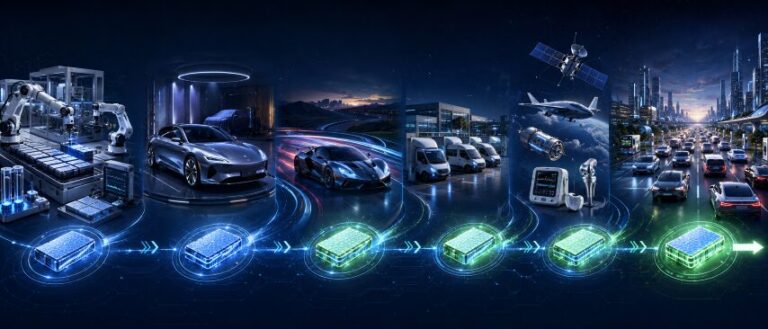
Four early market forms appear especially plausible. First is the premium EV market, where high energy density and fast charging can serve as differentiating features. Second is the high-performance or high-power vehicle market. Toyota’s references to sports cars and commercial vehicles requiring rapid charging suggest that initial applications may emerge in segments with demanding performance requirements. Third is the controlled-fleet market. Taxis, logistics vehicles, commercial vehicles, and fixed-route vehicles may provide favorable environments for early technical validation because charging patterns and operating data can be closely monitored. Fourth is the high-value specialty market, including aerospace, defense, medical devices, satellites, and compact systems. These markets are less price-sensitive and place a premium on safety, energy density, and reliability, making them relatively plausible early adopters.
By contrast, rapid adoption in the mass-market EV segment is less likely. As the IEA data indicate, EV battery demand is already large, and existing lithium-ion battery supply chains are expanding across China, Europe, the United States, and emerging markets.17 Combined with falling lithium-ion battery prices, this means solid-state batteries are more likely to begin as a differentiated technology in segments that can tolerate higher prices in exchange for higher performance and safety, rather than as an immediate replacement technology across the entire EV market.
7. Market Conditions: The Dual Pressure of Demand Growth and Price Decline
The commercialization potential of solid-state batteries cannot be determined by technical performance alone. Market conditions shape both the speed and direction of technological transition. Expanding EV battery demand creates an opportunity for solid-state batteries. The IEA reports that EV battery deployment in 2025 increased by approximately 30 percent from 2024 and was more than seven times higher than in 2020.18 This indicates that the EV market has grown large enough to absorb next-generation battery technologies.
At the same time, declining lithium-ion battery prices place strong pressure on solid-state batteries. Even if solid-state batteries deliver superior performance, their entry into mass-market EVs may be constrained if lithium-ion battery prices continue to fall and performance continues to improve. Low-cost chemistries such as LFP batteries may remain highly competitive in mass-market EVs and energy storage systems, pushing early solid-state adoption toward higher-price and higher-performance segments.
This creates a paradox in the market dynamics of solid-state batteries. EV market growth increases the perceived need for solid-state batteries, but the scale economies of lithium-ion batteries raise the threshold that solid-state batteries must clear. A new technology must not only offer superior performance; it must also compete in manufacturing yield, cost, supply-chain stability, safety certification, and vehicle-integration cost.
The early market after 2027 is therefore unlikely to form simply because demand exists. Rather, it is more likely to open first in segments where performance, safety, and charging time matter more than cost. Broader vehicle-market adoption would then depend on improvements in production yield and cost reduction.
8. Policy and Regulatory Conditions: Sustainability and Supply Chains
The industrialization of solid-state batteries is also linked to policy and regulatory conditions. EU Regulation 2023/1542 establishes a regulatory framework for batteries and waste batteries that addresses sustainability, safety, recycling, carbon footprint, and raw-material requirements.19 This means that next-generation batteries will not be evaluated solely by energy density and charging speed.
Solid-state batteries may offer advantages in safety and energy density, but new materials and processes will require renewed attention to supply chains and recycling systems. If sulfide electrolytes, lithium-metal anodes, high-nickel cathodes, or specialized cathode materials are used, raw-material sourcing and cost structure will become central variables in commercialization. Toyota’s collaboration with Idemitsu and Sumitomo can be interpreted as an effort to manage these supply-chain bottlenecks in advance.
Policy and regulatory conditions represent both opportunities and constraints. Regulatory environments that emphasize safety, carbon reduction, recycling, and supply-chain transparency may create opportunities for next-generation technologies such as solid-state batteries. At the same time, market entry may be delayed if certification, standardization, lifetime evaluation, disposal, and recycling requirements are not met. The paradigm shift associated with solid-state batteries is therefore not simply a technological issue; it is an ecosystem-level industrial issue.
9. Discussion
Solid-state batteries have the potential to reshape the existing lithium-ion battery regime. By using solid electrolytes, they may provide structural safety advantages, and when combined with lithium-metal or anode-less designs, they can target high energy density and rapid charging. The roadmaps of Samsung SDI, LG Energy Solution, SK On, Toyota, QuantumScape, and Solid Power indicate that solid-state batteries are moving from laboratory research toward the threshold of industrialization.
Yet this trajectory should not be interpreted as the completion of a paradigm shift. The core bottlenecks remain significant: room-temperature ionic conductivity, interfacial stability, large-area manufacturing, mitigation of degradation during repeated cycling, safety validation, pilot production, mass-production yield, and cost competitiveness must all be addressed. Experts continue to identify scaling from pilot lines to automotive pack production as a major bottleneck.20
The 2027–2029 roadmaps should therefore be understood less as the completion of replacement and more as the beginning of validation. During this period, solid-state batteries will be tested through limited commercialization, premium-vehicle adoption, sample-performance validation, pilot-production expansion, and supply-chain development. If costs and yields improve through the early 2030s, solid-state batteries may gradually expand in the high-performance EV market. Broad adoption in mass-market EVs, however, will require competition with conventional lithium-ion batteries on cost.
Solid-state batteries should therefore be defined not as a technology that will soon replace lithium-ion batteries, but as a conditional transition technology that could become paradigm-shifting when technical, manufacturing, market, and policy conditions converge. Recognizing this conditionality allows the discussion to avoid both exaggerated optimism and excessive skepticism.
10. Conclusion
This article has reviewed the technical principles, commercialization bottlenecks, major corporate roadmaps, and post-2027 early market formation of solid-state batteries. The analysis suggests that solid-state batteries are an important technological candidate for reshaping the safety and energy-density limitations of conventional lithium-ion batteries. Yet the industrial transition will be possible only when solid-electrolyte performance, interfacial stability, large-area manufacturing, production yield, cost competitiveness, supply-chain readiness, and policy and regulatory conditions are jointly satisfied.
Toyota’s roadmap is particularly instructive because it shows that solid-state battery commercialization is an integrated project involving automakers, electrolyte-material suppliers, cathode-material producers, and supply-chain strategy. Toyota aims to introduce BEVs equipped with solid-state batteries in 2027–2028 while working with Idemitsu on solid-electrolyte supply chains and with Sumitomo on cathode-material mass production. This indicates that competition in solid-state batteries is not a matter of cell performance alone, but a systemic competition across materials, manufacturing processes, vehicle integration, and supply chains.
After 2027, the early market is more likely to form around premium electric vehicles, high-performance vehicles, controlled fleets, and high-value specialty applications than across the entire mass-market EV segment. Broader adoption may become possible in the early to mid-2030s if cost, yield, lifetime, safety validation, certification, and supply chains stabilize. However, as long as lithium-ion batteries continue to benefit from falling costs and established scale economies, mass diffusion of solid-state batteries is not guaranteed.
Ultimately, the central question in solid-state battery competition is not which company announces first, but which company can translate sample-level performance into repeatable mass-production performance and then scale that performance into a cost-competitive industrial system. If that transition succeeds, solid-state batteries may move beyond the label of “next-generation battery” and become a central technology in an actual industrial paradigm shift.
Limitations
This article relies on publicly available corporate materials, international-organization reports, market-research forecasts, and major news sources to examine the industrialization conditions of solid-state batteries. Several limitations follow from this approach. First, corporate announcements should be understood as company-defined roadmaps or sample-level disclosures rather than independently verified mass-production performance. Second, market-research forecasts depend on assumptions about technology maturity, production yield, cost decline, and automaker adoption, and should therefore be interpreted as scenario-based projections rather than definitive predictions. Third, the discussion of policy and regulation focuses primarily on the EU battery regulation as a general industrial framework; a more detailed comparison of national laws and article-level regulatory provisions remains a task for future research.
Endnotes
- International Energy Agency, Global EV Outlook 2026: Electric Vehicle Batteries. The IEA reports that EV battery deployment reached 1.2 TWh in 2025 and that EVs accounted for more than 70 percent of total battery deployment.
- BloombergNEF, Lithium-Ion Battery Pack Prices Fall to $108 Per Kilowatt-Hour, Despite Rising Metal Prices. BNEF reports an average lithium-ion battery pack price of $108/kWh in 2025.
- LG Energy Solution, All-Solid-State Batteries. LG Energy Solution presents safety, high energy density, fast charging below 20 minutes, and a 2029 commercialization plan for sulfide-based solid-state batteries.
- LG Energy Solution, All-Solid-State Batteries.
- Toyota Motor Corporation and Sumitomo Metal Mining, Sumitomo Metal Mining and Toyota Collaborate on Mass Production of Cathode Materials for All-Solid-State Batteries.
- Samsung SDI, 900Wh/L All Solid Battery Becomes Reality.
- Samsung SDI, Samsung SDI to Collaborate on All-Solid-State Battery Validation Project with BMW Group.
- LG Energy Solution, All-Solid-State Batteries.
- Toyota Motor Corporation and Idemitsu Kosan, Idemitsu and Toyota Announce Beginning of Cooperation toward Mass Production of All-Solid-State Batteries for BEVs.
- Toyota Motor Corporation and Idemitsu Kosan, Idemitsu and Toyota Announce Beginning of Cooperation toward Mass Production of All-Solid-State Batteries for BEVs.
- Solid Power, Solid Power Partners with Samsung SDI and BMW to Advance All-Solid-State Battery Technology.
- Toyota Motor Corporation and Idemitsu Kosan, Idemitsu and Toyota Announce Beginning of Cooperation toward Mass Production of All-Solid-State Batteries for BEVs.
- Toyota Motor Corporation and Sumitomo Metal Mining, Sumitomo Metal Mining and Toyota Collaborate on Mass Production of Cathode Materials for All-Solid-State Batteries.
- TechRadar, Toyota says it will launch the world’s first solid-state EVs in 2027, but is that realistic? Here’s what experts say.
- Toyota Motor Corporation and Idemitsu Kosan, Idemitsu and Toyota Announce Beginning of Cooperation toward Mass Production of All-Solid-State Batteries for BEVs; LG Energy Solution, All-Solid-State Batteries.
- IDTechEx, Solid-State Batteries 2026–2036: Technology, Forecasts, Players.
- International Energy Agency, Global EV Outlook 2026: Electric Vehicle Batteries.
- International Energy Agency, Global EV Outlook 2026: Electric Vehicle Batteries.
- European Union, Regulation (EU) 2023/1542 concerning batteries and waste batteries.
- TechRadar, Toyota says it will launch the world’s first solid-state EVs in 2027, but is that realistic? Here’s what experts say.
References
- BloombergNEF. (2025). Lithium-Ion Battery Pack Prices Fall to $108 Per Kilowatt-Hour, Despite Rising Metal Prices. BloombergNEF.
- European Union. (2023). Regulation (EU) 2023/1542 concerning batteries and waste batteries. Official Journal of the European Union.
- IDTechEx. (2025). Solid-State Batteries 2026–2036: Technology, Forecasts, Players. IDTechEx.
- International Energy Agency. (2026). Global EV Outlook 2026: Electric Vehicle Batteries. IEA.
- LG Energy Solution. (n.d.). All-Solid-State Batteries. LG Energy Solution.
- Samsung SDI. (2024). 900Wh/L All Solid Battery Becomes Reality. Samsung SDI Newsroom.
- Samsung SDI. (2025). Samsung SDI to Collaborate on All-Solid-State Battery Validation Project with BMW Group. Samsung SDI.
- Solid Power. (2025). Solid Power Partners with Samsung SDI and BMW to Advance All-Solid-State Battery Technology. Solid Power.
- TechRadar. (2025). Toyota says it will launch the world’s first solid-state EVs in 2027, but is that realistic? Here’s what experts say. TechRadar.
- Toyota Motor Corporation, & Idemitsu Kosan. (2023). Idemitsu and Toyota Announce Beginning of Cooperation toward Mass Production of All-Solid-State Batteries for BEVs. Toyota Global Newsroom.
- Toyota Motor Corporation, & Sumitomo Metal Mining. (2025). Sumitomo Metal Mining and Toyota Collaborate on Mass Production of Cathode Materials for All-Solid-State Batteries. Toyota Global Newsroom.